
The Secondary Market for Life Insurance
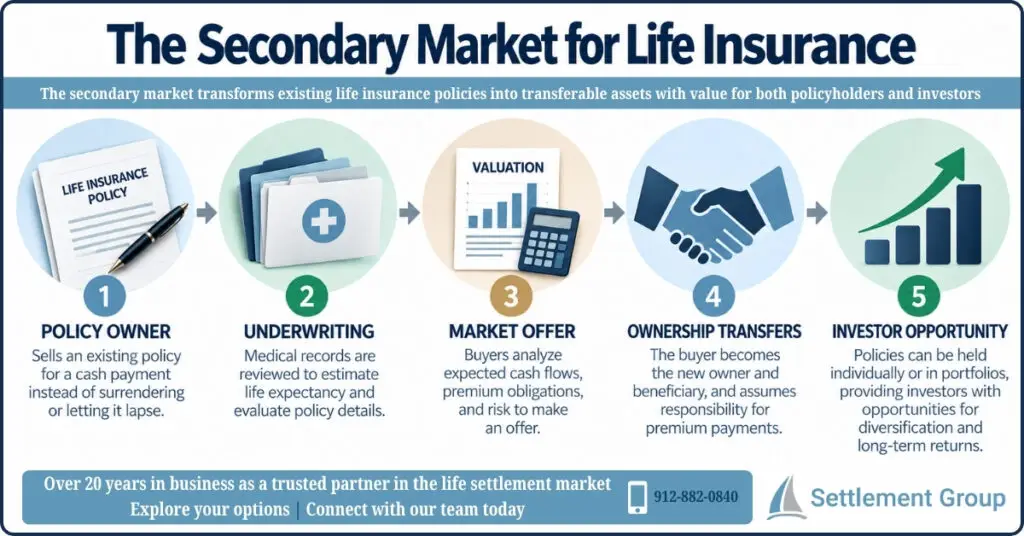
Life insurance policies are traditionally purchased to provide financial protection for beneficiaries, but an existing policy can also have value as a transferable asset. The secondary market for life insurance allows eligible policyholders to sell their policies to third-party buyers rather than surrendering them to the issuing carrier or allowing coverage to lapse. For investors, […]
Settlement Group Adds Utah Life Settlement Provider License

We’re pleased to share that we’ve added another state to our licensing footprint, this time in Utah. Our newly granted life settlement provider license brings our total to 39 licenses. For Utah policy owners, their financial advisors, and estate planning professionals, this means direct access to a provider with more than two decades of experience and a long-standing record of regulatory […]
Understanding Life Expectancy Underwriting
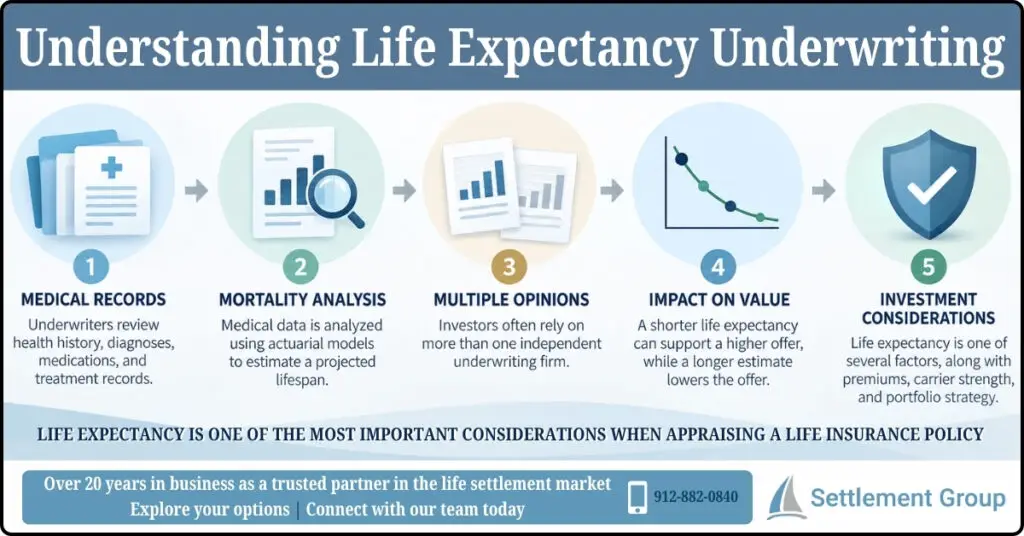
Every life settlement transaction depends heavily on life expectancy analysis, which is why understanding life expectancy underwriting matters to anyone evaluating this asset class or considering the sale of a policy. Life expectancy underwriting is the process of estimating how long an insured is likely to live based on medical records, health history, and actuarial […]
Life Settlements as a Non-Correlated Asset
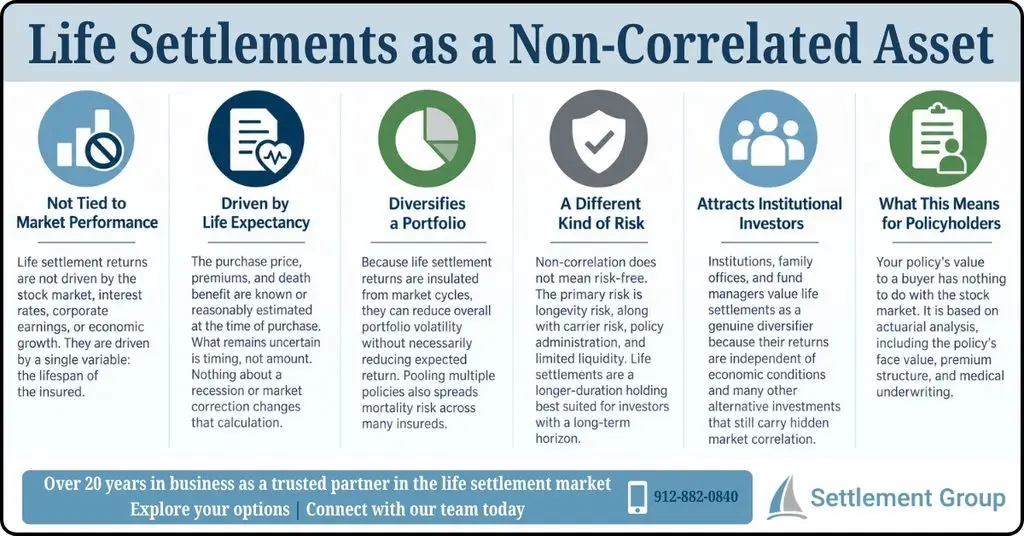
Investors building a diversified portfolio are often looking for holdings that behave independently of the broader market, which is why life settlements as a non-correlated asset draw attention from institutions, family offices, and fund managers. Unlike equities, bonds, or real estate, a life settlement’s return is not driven by interest rates, corporate earnings, or economic […]
How Life Settlement Investing Works
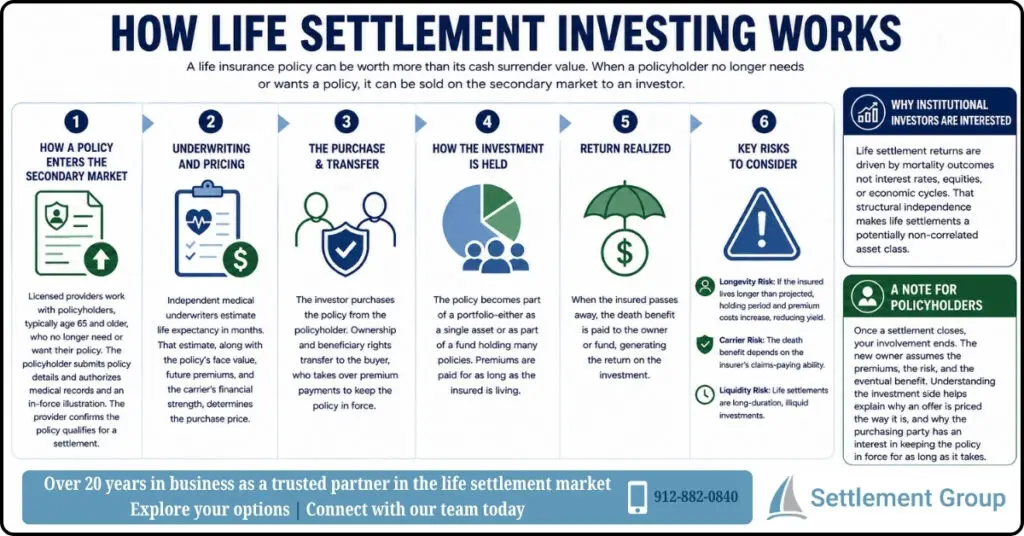
For investors evaluating alternative assets, understanding how life settlement investing works starts with a simple premise. A life insurance policy is a contract with a market value that can exceed its cash surrender value. When a policyholder no longer needs or wants a policy, that policy can be sold on the secondary market rather than […]