A life settlement transaction involves more than transferring ownership of an existing life insurance policy. Understanding what happens to a policy after it’s sold is important for institutional purchasers, funding partners, and other participants in the secondary market. Once the transaction closes, the policy must be maintained, monitored, and administered throughout the remaining holding period. These ongoing responsibilities affect premium obligations, portfolio management, and the eventual collection of death benefits.
Who Owns a Life Insurance Policy After a Life Settlement?
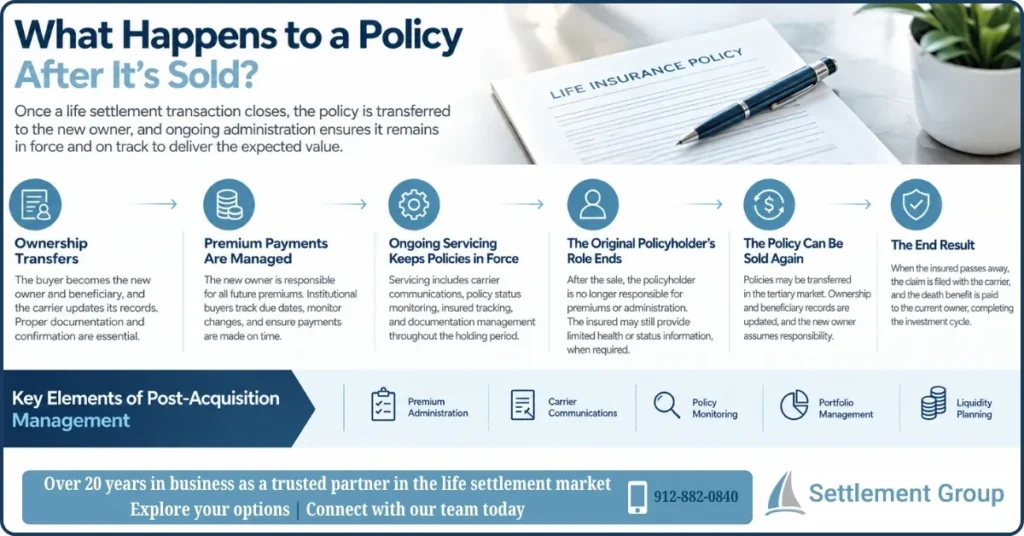
When a life settlement is completed, ownership of the policy is transferred to the purchaser or its designated ownership entity. The beneficiary designation is also generally changed so that the purchaser or its designated beneficiary is entitled to receive the death benefit. These changes require documentation submitted to the issuing insurance carrier, which may include ownership assignment forms, beneficiary change requests, and other supporting documents.
Confirming that the carrier has properly recorded the ownership and beneficiary changes is an important part of the transaction. The purchaser or its servicing representative must also maintain accurate records of the policy, its ownership, and any subsequent administrative changes.
Who Pays the Premiums After a Life Settlement?
After acquisition, responsibility for maintaining the policy generally shifts to the new owner. Premium payments must continue as required to prevent the policy from lapsing, and depending on the policy type and structure, those obligations may remain relatively consistent or change over time. Institutional purchasers evaluate future premium requirements during underwriting and acquisition, but premium management remains an ongoing responsibility throughout the holding period.
This includes monitoring payment schedules, reviewing carrier illustrations and policy values, tracking changes in premium requirements, and confirming that payments have been received and properly applied. For portfolios containing numerous policies, consistent administration and accurate recordkeeping are essential to maintaining the policies in force and managing future funding obligations.
What Is Involved in Servicing a Life Settlement Policy?
Policy servicing encompasses the ongoing administrative responsibilities associated with maintaining an acquired life insurance policy. Beyond premium payments, servicing may involve carrier communications, policy status verification, insured tracking, documentation management, and coordination of information required throughout the holding period. Servicing providers may also review updated policy illustrations and identify changes that could affect future premium obligations or policy performance.
These activities are particularly important for institutional purchasers holding multiple policies across different carriers, policy types, and premium schedules. Effective servicing helps maintain the policies in force while providing the information needed for portfolio management, liquidity planning, and future transactions.
Does the Original Policy Owner Have Any Responsibilities After the Sale?
Once ownership has transferred, the original policy owner generally no longer has responsibility for paying premiums or administering the policy. However, the original policy owner and the insured may be different individuals, and the insured remains the person whose life is covered by the policy even after ownership and beneficiary rights have changed.
The insured may continue to have limited involvement in providing health or status information. This information may be necessary for ongoing policy administration and eventual claims processing, and any communication or information requests must comply with applicable privacy requirements and contractual provisions. Typically, contact is limited to a few times per year.
Can a Life Settlement Policy Be Sold Again?
A policy acquired through a life settlement may subsequently be transferred to another purchaser. These transactions are part of the tertiary market for life insurance, where previously acquired policies or portfolios may be sold between institutional buyers and other market participants. A tertiary transaction may involve an individual policy or a larger portfolio, depending on the purchaser’s objectives and the structure of the assets being transferred.
When a policy is sold again, ownership and beneficiary records must be updated as appropriate, and the new owner assumes responsibility for maintaining the policy. The underlying insurance contract generally remains in force according to its existing terms, although ownership changes and other administrative requirements must be properly completed. Tertiary transactions provide another way for institutional participants to acquire, transfer, or reposition existing life settlement assets.
How Is an Acquired Policy Managed Within a Portfolio?
When a purchased policy becomes part of a larger life settlement portfolio, its ongoing administration contributes to the management of the portfolio as a whole. Institutional purchasers may monitor policies collectively to evaluate premium obligations, projected cash flows, carrier concentrations, and changes in expected holding periods. Each policy retains its individual characteristics, including face value, premium requirements, issuing carrier, and life expectancy estimate, which influence both individual policy economics and broader portfolio planning.
Accurate servicing information supports decisions about liquidity, premium funding, portfolio maintenance, and potential future transactions. As portfolio composition changes through additional acquisitions, policy maturities, or tertiary transactions, ongoing administration helps maintain accurate information about the assets and their associated obligations.
What Happens When a Life Settlement Policy Matures?
When the insured passes away, the designated beneficiary or its authorized representative submits a death benefit claim to the issuing insurance carrier. The carrier reviews the claim and required documentation before determining payment under the terms of the policy. Once approved, the death benefit is paid to the designated beneficiary, subject to the policy’s provisions and any applicable adjustments.
For institutional purchasers, the proceeds become part of the investment’s realized cash flows. The financial outcome depends on the acquisition price, premiums paid throughout the holding period, administrative expenses, and the timing and amount of the benefit received. For policies held within a portfolio, proceeds may be managed or distributed according to the investment vehicle’s structure.
Why Is Post-Acquisition Servicing Important in Life Settlements?
Understanding what happens to a policy after it’s sold highlights the importance of ongoing administration throughout the life settlement investment lifecycle. Ownership transfers, premium management, carrier communications, insured tracking, portfolio maintenance, and claims processing all require attention after the initial acquisition. These activities help maintain acquired policies and support the management of individual assets and institutional portfolios.
Institutional purchasers and funding partners can contact Settlement Group at 912-882-0840 to discuss life settlement transactions and portfolio support.